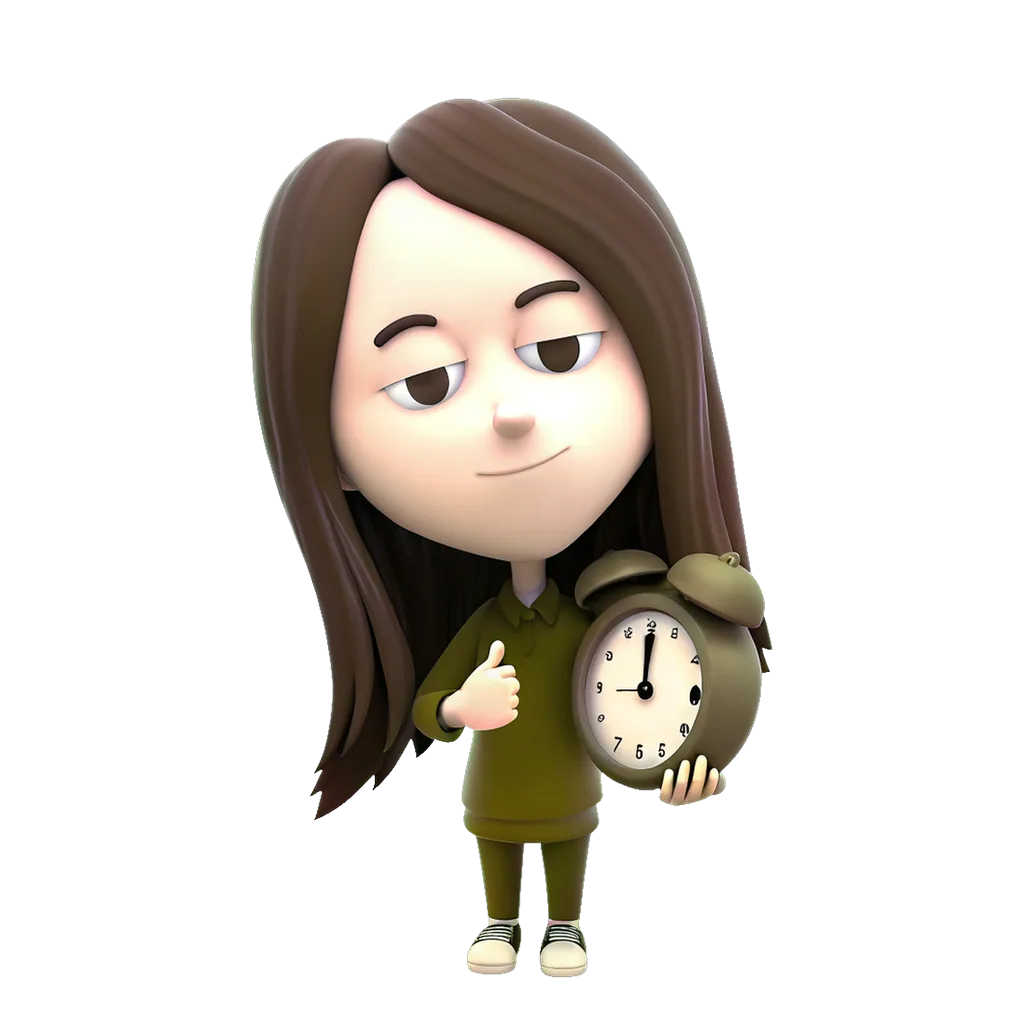
Neither (in between)
You're flexible — you don't strongly lean lark or owl.
You sit comfortably in the middle of the lark–owl spectrum, with no strong pull in either direction. You can rise reasonably early or stay up reasonably late without the world ending, which makes you adaptable in a way the extremes envy. The trade-off is that you lack their built-in superpower hours — you have to be a little more deliberate about finding and protecting your own best window.
Strengths
- Flexible
- Adaptable schedule
- Shifts to fit life
Pitfalls
- Rhythm can drift without anchors
In depth
Your natural rhythm
You wake without much drama somewhere in the seven-to-eight range and ease into the day at a moderate pace. Your energy tends to rise through the morning, hold steady, dip a little after lunch, and recover for a decent stretch in the afternoon and early evening. You rarely peak as dramatically as a strong type, but you also rarely crash — your curve is gentler and broader, and you can shift it a fair way in either direction when life demands it.
When you shine
Your good hours are spread out rather than concentrated, with reliable patches in the late morning and again in the late afternoon. Because you are flexible, you can shape your peak around your commitments: schedule deep work in whichever of those windows your day leaves freest. Use your adaptability to take the slot nobody else wants and still perform — but do pick a primary window and protect it, or your day can blur into uniform mediocrity.
The daily struggle
Your struggle is not a clash with the clock but a lack of natural structure. With no strong pull, it is easy to drift — to stay up later than is wise one night, sleep in the next, and let your rhythm wander until you feel vaguely flat all day. Without the lark’s urgency or the owl’s late surge, you can fall into reacting to whatever is in front of you rather than steering your energy. The risk is comfortable formlessness rather than friction.
Work & life fit
You are the chameleon of chronotypes, which makes you a gift for jobs with rotating shifts, variable hours or unpredictable demands — you handle early starts and late finishes better than most. You suit roles that need flexibility and steadiness rather than a single heroic burst. The key is to impose a little structure on yourself: a consistent sleep schedule, a chosen deep-work window, and clear boundaries, so your adaptability becomes a strength rather than an excuse to drift.
Working with your clock
Since biology gives you few rules, write your own. Pick a regular wake and sleep time and hold to it, even at weekends, to give your loose rhythm a backbone. Experiment for a week or two to find which window — late morning or late afternoon — feels sharpest, then guard it for your hardest tasks. Use your flexibility deliberately rather than passively, and lean on morning light, regular meals and a tidy evening routine to keep your gentle curve from sliding around.
You know you’re one when…
- You can manage an early start or a late night without much fuss.
- You never feel a dramatic peak, but you rarely properly crash either.
- You adapt to shift work and changing schedules better than your friends.
- You drift easily if you do not give yourself some structure.
- You are not sure whether you are “a morning person” — because you are both and neither.